Choosing Composite Decking vs. Traditional Wood Decking: Which Is Right for You?

Building or upgrading your outdoor deck is an exciting investment that can transform your backyard into a functional, beautiful extension of your home. One of the biggest decisions you'll face is choosing between composite decking and traditional wood decking. Each option has its advantages, and understanding these differences can help you decide which best suits your needs.
Advantages of Composite Decking
Low Maintenance: Unlike wood, composite decking requires minimal maintenance. Say goodbye to the time-consuming tasks of sanding, staining, or sealing your deck every year. A simple wash with soap and water will keep your composite deck looking great.
Durability: Composite decking is designed to withstand the elements—rain, sun, and even snow—without rotting, warping, or splintering. This makes it an excellent option for homeowners looking for a long-lasting deck.
Eco-Friendly Materials: Many composite decks are made from recycled materials, such as reclaimed wood fibers and plastics. This makes composite a more sustainable choice for environmentally conscious homeowners.
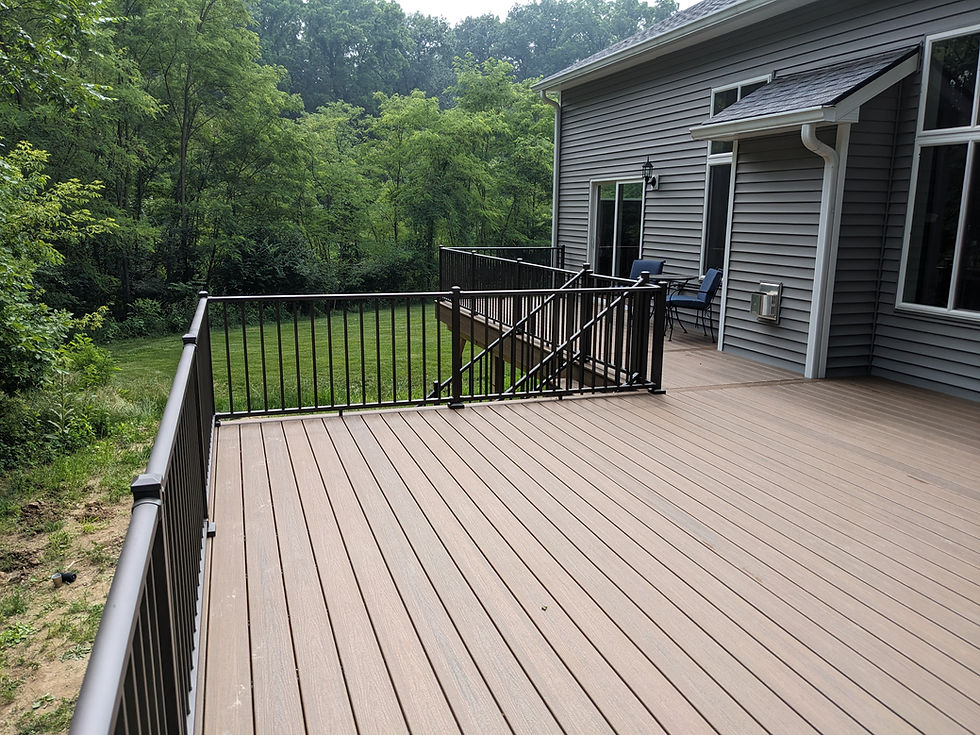
Aesthetic Options: Composite decking comes in a wide variety of colors, textures, and finishes, mimicking the look of natural wood while offering more customization options.
Fade and Stain Resistance: High-quality composite decking resists fading from UV exposure and staining from spills, ensuring your deck stays beautiful for years.
Why Some Homeowners Choose Traditional Wood Decking
Lower Initial Cost: Wood decking generally has a lower upfront cost compared to composite materials. For budget-conscious homeowners, this can make wood a more attractive option initially.
Natural Aesthetic: Many people love the authentic look and feel of natural wood. The character of real wood, with its unique grain patterns and rich tones, can be difficult to replicate fully with composite alternatives.
Customizability: Wood can be easily cut, shaped, and painted or stained to match your specific design preferences. If you enjoy DIY projects, wood may offer more flexibility.
Consider the Maintenance Factor
While wood decking may be cheaper upfront, it requires regular maintenance to maintain its appearance and structural integrity. This includes:
Annual sanding, staining, or painting
Routine cleaning to prevent mold, mildew, and rot
Frequent inspections for cracks, splinters, or loose boards
Over time, the costs and effort associated with maintaining a wood deck can add up, potentially outweighing the initial savings.
The Long-Term Investment
When evaluating the total cost of ownership, composite decking often proves to be more cost-effective due to its durability and minimal upkeep. Additionally, composite materials often come with extended warranties that provide added peace of mind.
Making the Right Choice for Your Home
Your decision ultimately depends on your budget, lifestyle, and preferences. If you prioritize low maintenance and long-term value, composite decking is likely your best choice. On the other hand, if you prefer the charm of natural wood and are willing to put in the maintenance work, traditional wood decking might be right for you.
Whichever option you choose, investing in a high-quality deck will enhance your outdoor space and provide years of enjoyment for you and your family.


Comments